
Thematic Areas: Climate Adaptation
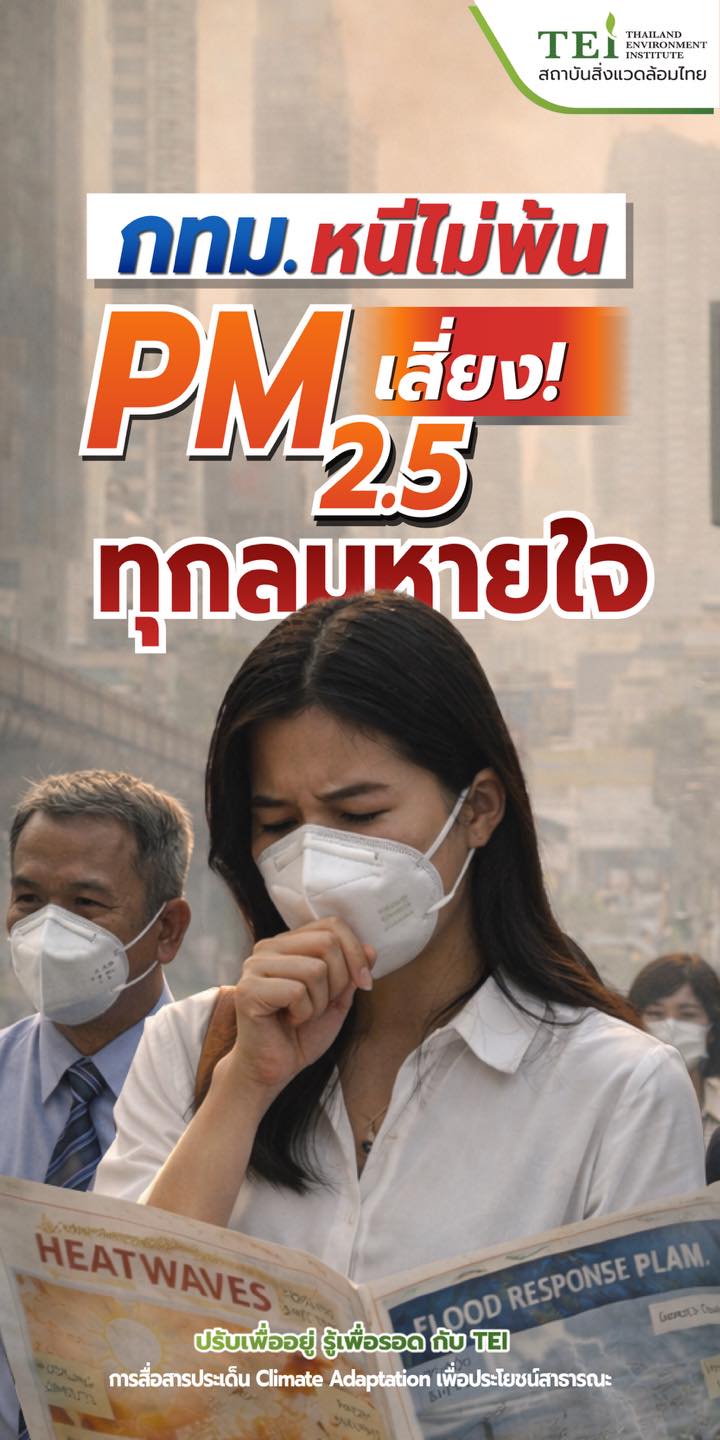
Before we could even breathe a sigh of relief... the dust has come knocking at our doors once again. People in Bangkok and its vicinity must return to life under a blanket of "Toxic Smog". This is not a new picture, nor is it strange. It is a "Recurring Crisis" that Climate Change is intensifying. It acts like an "Inversion Layer" (a lid over the city), trapping toxic dust for longer periods and in higher concentrations than ever before. This significantly impacts the health and livelihoods of countless people.
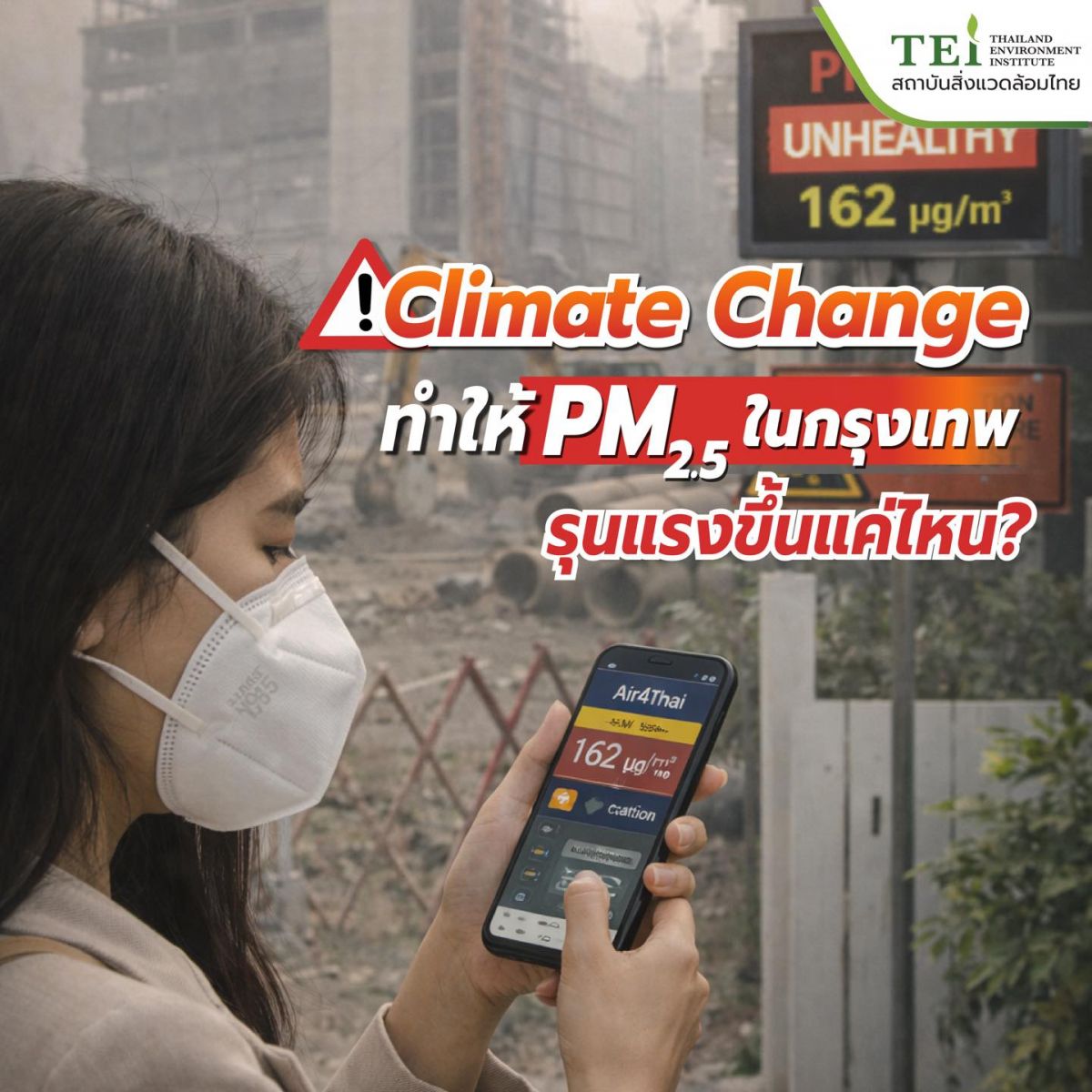
A report from the Pollution Control Department (PCD) indicates that the PM2.5 situation in Bangkok and surrounding areas on January 16, 2029—a day when the Bangkok sky looked gloomier than usual—is showing a downward trend. However, dust levels were still recorded between 7.3 – 81.2 micrograms/m³, which remains consistently above safety standards.
The primary causes are closed weather conditions, stagnant air, and the accumulation of atmospheric pollution—a direct consequence of "Global Boiling." This has caused dust levels, which should not exceed 37.5 micrograms/m³, to spike into the Orange–Red levels, causing concerning health impacts in many areas.
Numbers never lie... What did 2028 teach us? Statistics from the Ministry of Public Health clearly show that this fine dust is far more deadly than we thought. Throughout 2028, although the PM2.5 situation might have felt lighter due to intermittent rain, the shocking truth is that 10 million Thais were hospitalized due to pollution-related diseases, including respiratory, heart, and skin conditions.
In 2028, over 38 million people lived in areas where PM2.5 levels exceeded health standards. This is the "Invisible Cost" of the city and the country that must be paid repeatedly every year unless we start adapting seriously.
The Thailand Environment Institute (TEI) points out that the recurring dust bombardment of Bangkok is not a temporary problem, but a result of urban structure and Climate Change. It is time for us to "Adapt to Live, Know to Survive" in alignment with the National Adaptation Plan (NAP):
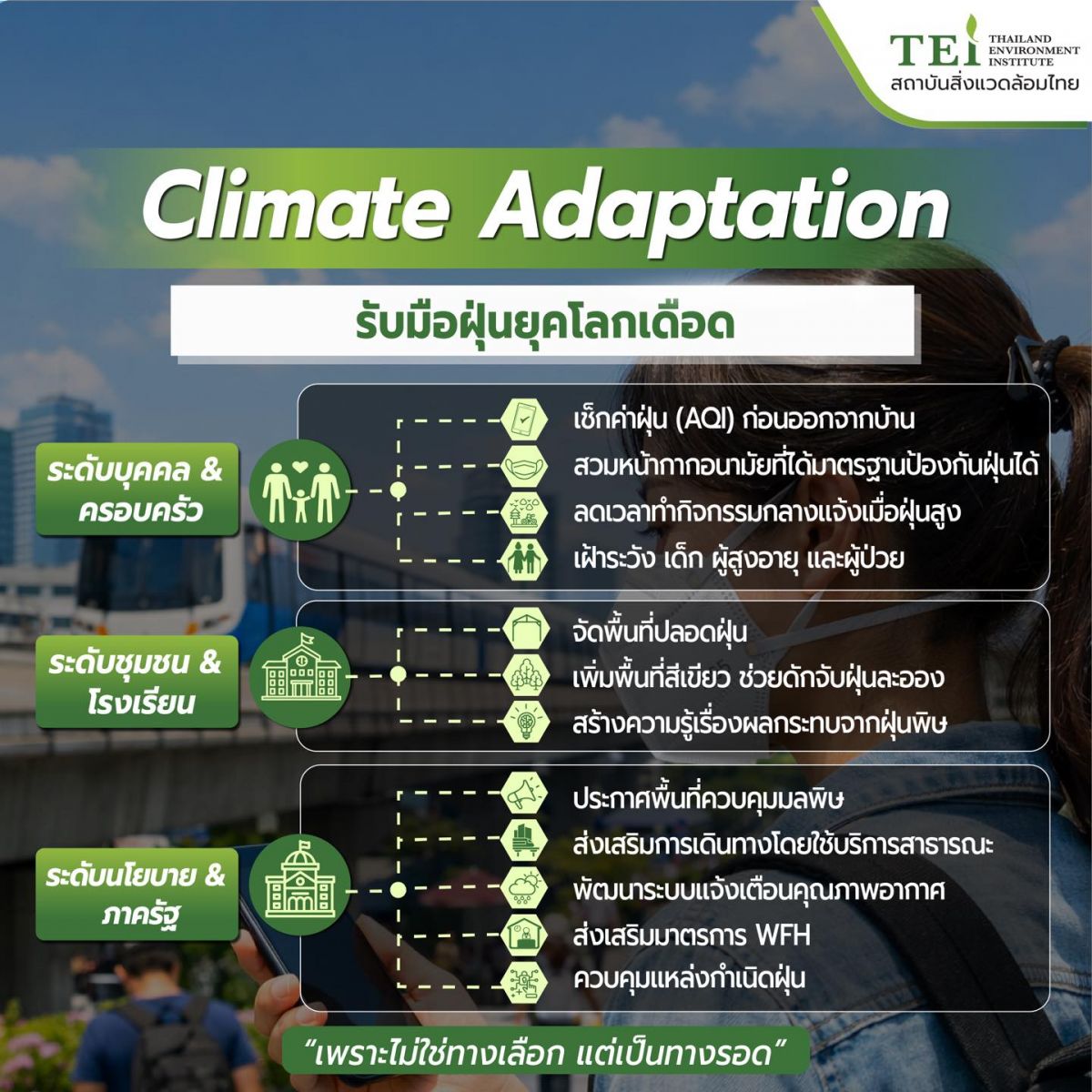
Individual & Family LevelCheck Dust Levels: Use the PCD's Air4Thai app before leaving the house.
Wear Masks: Use masks capable of filtering PM2.5 whenever levels exceed the standard of 37.5 micrograms/m³.
Reduce Activities: Avoid outdoor activities during high dust periods.
Monitor Health: Watch children, the elderly, and patients closely for any abnormal symptoms.
Create Dust-Free Zones: Designate classrooms or childcare centers equipped with air filtration systems.
Increase Green Spaces: Plant trees to trap dust and reduce accumulation.
Communicate: Continuously educate people on the impacts of toxic dust and Climate Change.
Declare Control Zones: Announce pollution control areas in critical air quality zones.
Support Public Transport: Promote and support travel via public services.
Real-Time Alerts: Develop air quality warning systems accessible in all areas.
Promote WFH: Encourage Work From Home measures and reduce private car usage during dust crises.
"The dust of early 2029 is a warning signal..."
If we do not "Adapt," this crisis will cycle back every year with increasing severity. The TEI supports communication regarding Climate Adaptation for the public good, because protecting our health today is "not an option, but the only way to survive" for all Thai people.
Would you like me to extract the key statistics from this translation into a summary table for easier presentation?

Share: