
Thematic Areas: Climate Adaptation
Crisis in the Air: From Nakhon Nayok’s Flames to Bangkok’s Toxic Fog
Rescue workers battled flames through the night as the health of the entire nation hangs in the balance, forced to breathe toxic dust daily.
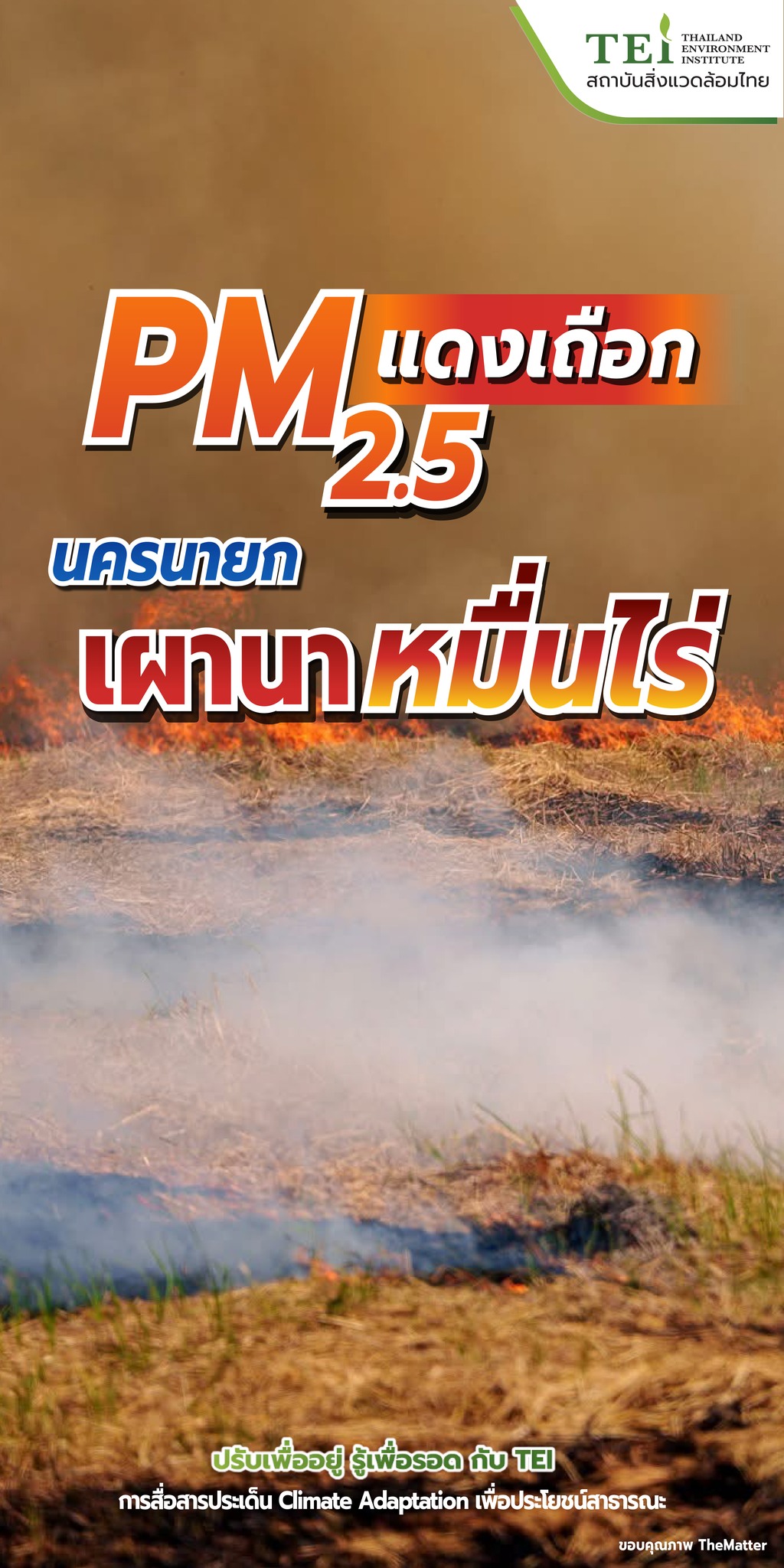
Yesterday evening (Jan 27), the skies over Nakhon Nayok turned a hellish red. A massive wildfire swept through 13,000 rai of fields overnight. This isn't just a distant fire; it is the ground zero of the "toxic dust" hitching a ride on the wind to invade city bedrooms. Coupled with Climate Change, which has created a "stagnant air" effect—trapping smoke under an atmospheric lid—we woke up this morning to dangerously polluted air.
This morning, data from Air4Thai (Pollution Control Department) and the BMA revealed 10 frontline areas in the East and suburbs where dust levels skyrocketed into the "Red Zone" (Health Impact Level) due to direct wind currents:
Nonthaburi: 94.6 µg/m³ (The most critical crisis)
Nong Chok: 80.8 µg/m³ (Directly downwind from Nakhon Nayok)
Samut Songkhram: 77.6 µg/m³
Min Buri: 77.3 µg/m³
Khlong Sam Wa: 76.5 µg/m³
Khan Na Yao: 76.1 µg/m³
Prawet: 71.7 µg/m³
Sai Mai: 70.7 µg/m³
Lat Krabang: 69.2 µg/m³
60th Anniversary Garden (Rom Klao): 68.0 µg/m³
Note: These levels significantly exceed the national safety standard of 37.5 µg/m³.
In response, the BMA has requested cooperation from 35 districts to Work from Home (WFH) immediately to minimize exposure during this crisis. Conditions are expected to remain intense (Orange Level) through Jan 29–30.
Climate Change has disrupted natural patterns, leading to:
Extreme Drought: Parched fields act as kindling, making fires easier to ignite and faster to spread (Fire Weather).
Shifting Winds: Wind currents are now funneling massive smoke plumes directly into urban centers.
Air Stagnation: High atmospheric pressure creates a "cap," preventing dust from dispersing and causing toxic concentrations.
The Thailand Environment Institute (TEI) emphasizes that this crisis is no longer just an "environmental issue"—it is a direct risk to life, health, and public safety. While awaiting the formation of a new government, preparation and adaptation are not choices, but necessities. This follows the "Adapt to Live, Learn to Survive" concept under the National Adaptation Plan (NAP) for public health and agriculture.
1. For the PublicStrictly avoid outdoor activities!
Wear high-efficiency masks (N95) at all times when outdoors.
Keep doors and windows tightly shut; use air purifiers or create a "Clean Room" at home.
Immediate "Zero Burning": Stop all open-air burning of agricultural waste.
Use alternative soil management techniques to preserve soil quality.
Stay vigilant—monitor for fire signs and report them to local authorities immediately.
Enforce the Law: Strictly apply "no-burn" regulations.
Mobile Medical Units: Deploy help to vulnerable groups immediately.
Safety Protections: Implement measures to control fire and dust to protect lives and property.
Strict Sanctions: Withhold agricultural aid for those who continue to burn.
Wildfires are not a distant story. The air we breathe connects us all. This is a costly lesson that we are bound together by the atmosphere. Let us "adapt and stop burning" to ensure we and our children survive this crisis together.
References & Sources
Air Quality and Noise Management Division, Pollution Control Department (Air4Thai)
Bangkok Air Quality Information Center (Reported at 07:00 AM, January 28, 2026)
Image Credits
Illustration by: The Matter

Share: