Have you ever wondered where old mobile phones, broken computers, or unused electrical appliances go after being thrown away? These devices are not just "trash"; they are
electronic waste (E-waste), which is growing rapidly worldwide and becoming one of the most critical environmental challenges of our time.
Technological Advancements Lead to a Rise in E-Waste
The digital age, with its rapid technological development, has made electrical and electronic equipment—such as mobile phones, computers, televisions, and home appliances—an essential part of daily life. Combined with consumer behavior that favors constantly upgrading to newer models, the volume of end-of-life or unwanted electronic devices is surging. As a result, electronic waste (E-waste) is expanding rapidly, becoming an environmental issue that many countries around the world, including Thailand, are prioritizing and urgently seeking appropriate management strategies for.
E-waste differs from general waste because it contains both valuable materials and various hazardous substances, such as lead, mercury, cadmium, and flame retardants. If disposed of or dismantled improperly, these substances can leak into the soil, waterways, and air, causing long-term impacts on the ecosystem and public health. At the same time, electronic devices are sources of precious metals—like gold, silver, copper, and rare earth elements—which can be recovered and utilized if an efficient recycling system is in place.
.png) E-Waste... Closer to Home Than You Think
E-Waste... Closer to Home Than You Think
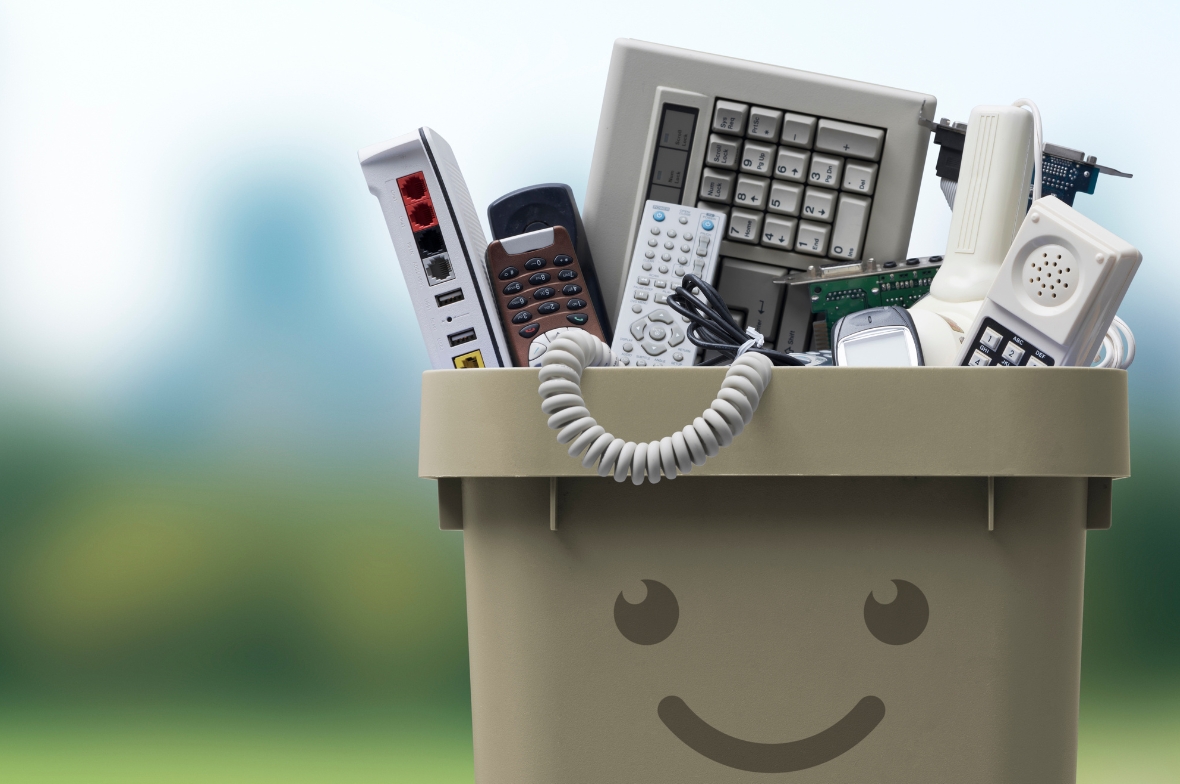
Old mobile phones, broken fans, unused computers, or replaced televisions are all E-waste that many people keep in their homes or sometimes discard with general trash. However, this type of waste requires special handling because it contains a mix of valuable materials and hazardous substances.
Thailand's situation reflects the growing significance of this problem. In 2023, Thailand generated over 680,000 tons of hazardous community waste. Over 65% of this, or approximately 442,000 tons, was E-waste. Yet, only about
21% was collected into proper management systems. This means a massive amount of E-waste remains hoarded in households or is sold and dismantled through substandard systems, which can lead to hazardous substances contaminating the environment and affecting the health of those involved.
Improperly managed E-waste impacts the environment, health, and the economy. Hazardous substances can contaminate soil, water sources, and the air when discarded or disposed of inappropriately. Furthermore, substandard sorting and recycling increase risks to workers and surrounding communities. Failing to bring E-waste into proper recycling systems also results in the loss of valuable resources, necessitating more natural resources and energy to produce new raw materials, and generating greenhouse gas emissions throughout the production chain. Therefore, proper E-waste management plays a vital role in environmental conservation, resource efficiency, and mitigating the impacts of climate change.
Shifting Policies and Perspectives: Turning E-Waste into Value
Thailand has established policies and action plans for E-waste management, including the 13th National Economic and Social Development Plan, the National Waste Management Action Plan, and the Bio-Circular-Green (BCG) Economy model. The country is also in the process of pushing for specific legislation on the management of Waste Electrical and Electronic Equipment (WEEE). This includes adopting the
Extended Producer Responsibility (EPR) principle to ensure producers and importers share the responsibility—from collection and recycling to proper disposal.
Another approach gaining traction is
Urban Mining, which views E-waste not as garbage, but as a valuable secondary source of raw materials. Precious metals and other materials can be reintroduced into the production process, helping to reduce natural resource consumption, lower raw material imports, and cut greenhouse gas emissions from new material production. Meanwhile, the Department of Primary Industries and Mines (DPIM) has developed various recycling technologies, including the recovery of gold, silver, copper, and lithium, as well as EV battery recycling, to increase resource value and support future industrial development.
.png) Changing Behaviors: Simple Steps Everyone Can Take
Changing Behaviors: Simple Steps Everyone Can Take
Everyone can play a part in reducing the E-waste problem by starting with simple daily habits:
-
Use devices for as long as possible: Maximize the use of your devices and maintain them to extend their lifespan, reducing new waste generation.
-
Repair before replacing: If a device is repairable, opt to fix it rather than buying a new one to save resources and minimize waste.
-
Separate E-waste: Do not mix it with general household trash, as E-waste contains both hazardous substances and recoverable materials.
-
Return through drop-off points or certified recycling systems: Take end-of-life devices to designated drop-off locations or authorized recyclers for safe and proper management.
-
Encourage others to take action: Spread awareness and invite family, friends, or coworkers to properly separate and return E-waste. Small changes by everyone will create a massive impact on society.
As we can see, solving the E-waste problem is not solely the government's responsibility. It requires cooperation from all sectors—producers, importers, businesses, the recycling industry, and the public—to sort and return end-of-life devices into the proper system.
If Thailand can develop a comprehensive E-waste management system from source to end-of-life, while tangibly promoting resource utilization under the Circular Economy concept, E-waste will no longer be just an environmental problem. Instead, it will become a crucial resource that generates economic value, reduces environmental impact, and supports the country's development toward a sustainable future.



Share: